





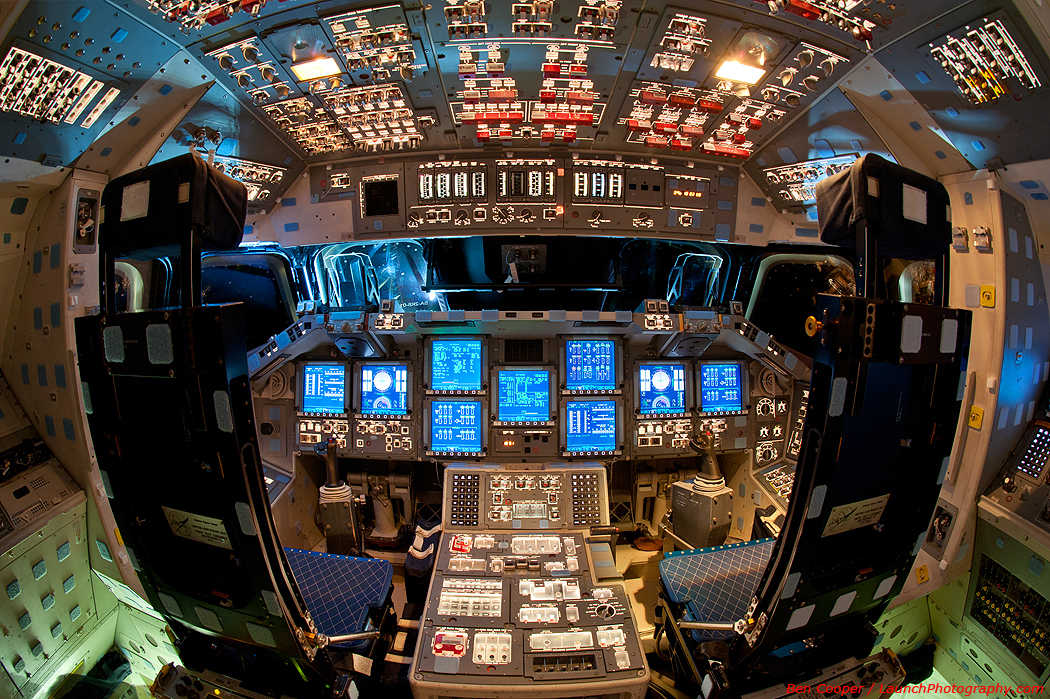



Stanley Kubrick brought Arthur C. Clarke onboard the project that grew into the whole 2001 franchise we recognize today.
It did not occur the other way around.
But the match was well made and resulted in something Michael
Benson rightly called “the most consequential collaboration in
either of their lives.”
The experience may have sparked a trend for Clarke. Later collaborators would include Gentry Lee (on all the sequels to Rendezvous with Rama), Stephen Baxter on the Time Odyssey series and, notably Frederik Pohl on The Last Theorem —a writer who by then (2008) was already a SFWA Grand Master.
In all or most of these collaborations, one senses that Clark is the senior partner, as Kubrick had been to him. It may be that Clarke saw the advantages of collaboration, but he certainly could not have missed those of remaining “on top”, however nominally.
He had not gone into it blindIt'd taken nine months to work out the contract with Kubrick. Afterward, they spent a very long time looping through ideas, scenes, structures.
Clarke seems to have maintained his optimistic eagerness, while Kubrick remained mercurial
and dissatisfied as ever.
The two agreed, early on, that the product of their collaboration
would be both a novel and a film, and there was some, possibly joking,
idea that they'd both take co-writing credit on each.
But the novel remains credited solely to Clarke and there's no reason to believe
Kubrick, a visual storyteller, was ever interested in becoming a
“co-novelist.”
Kubrick initiated the collaboration, he paid Clarke —or his production company did. But Clarke insists the collaboration ran both ways, and this is certain; It's a film neither of these men could have written alone
What's less well understood is how different the final result is from the version Clarke believed would be released, right up until its US
private premier.
There, Arthur Clarke realized what others who worked closely with
Kubrick also found: that the artists was ruthless when it came to his
product.
At that screening, Clarke learned that reams of explanatory voiceover had been removed. Nothing at all —about spaceflight, technology, centrifugal gravity or “space babies”— was to be explained to the audience.
Michael Moorcock, longtime friend of Clarke and one of at least two different sci-fi writers Kubrick reached out to when he grew dissatisfied with the older writer, tells how Clarke left the screening at the intermission, “close to tears.”
But here's the thing, or the set of things, the takeaways as
they say in chinese restaurants:
He'd been concerned that his novel, a co-equal creation with the film, due to come out a bit after the film's release, would read like the novelization of a Hollywood blockbuster. Himself seem nothing but a hired hack.
But when that film exploded on the screen it guaranteed the novel best-selling status and —whatever he thought about the precious voice-overs he'd fashioned so carefully being stripped completely and at the last moment— he did not bitch about it for decades, unlike some authors who had their work adapted by Kubrick.
Ahem.
So the lessons are: do be wary in collaboration. Protect yourself
legally. Then be open, ready, optimistic, eager. Throw yourself into it!
And finally, if the thing succeeds, bask in it. Don't hold resentful
grudges against a process that manifestly operated in your
favor.
dM
20260911 Reading, PA
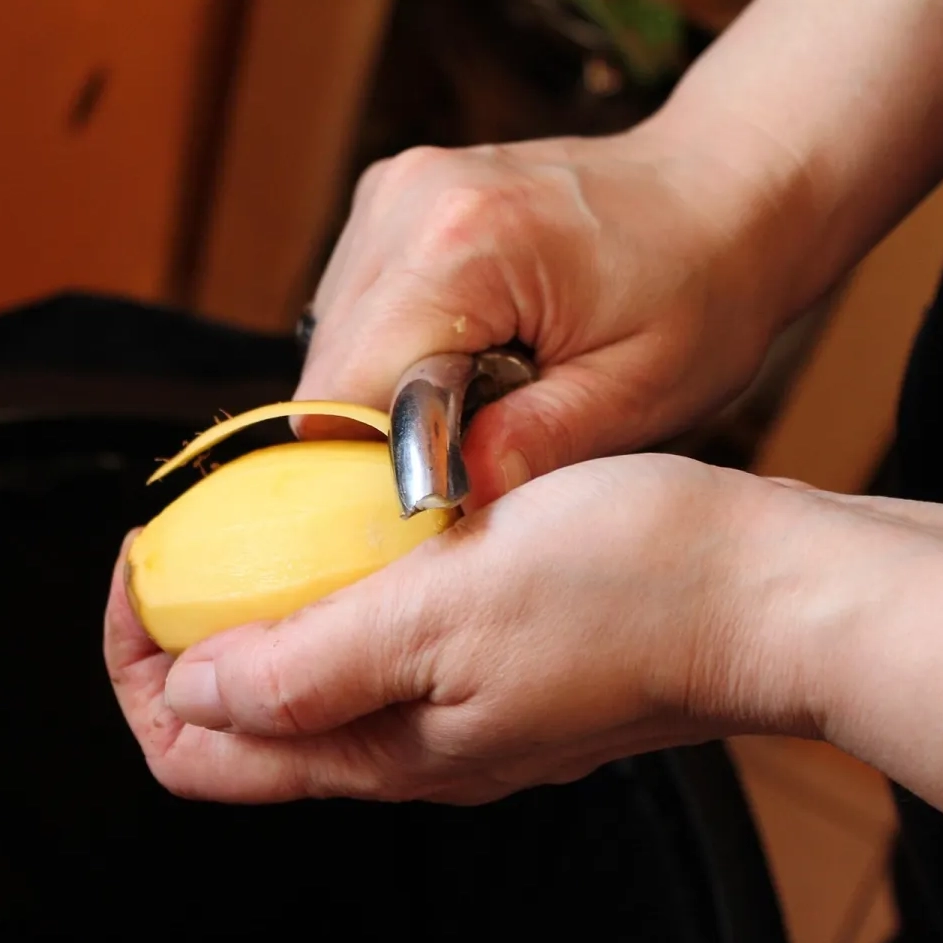
I was recently asked to write something for The Astounding Analog Companion, the blog of Analog Magazine. In which I tried to give a name to a writer's practice I think under-reported and not well understood.
Rather in line with A.E. van Vogt's naming of the "fix-up", and in a similar if inverted manner, I was trying to identify the act of preparing sections of a novel-in-progress for publication as stand-alone stories.
I mean, by this, specifically not published "excerpts" —I figure those are generally sold as such, and from novels already under contract.
Nor do I mean stories which "inspired" later novels, or were "worked into" larger works, though I do suspect that many of these latter are, in reality, what I've come to call "peel-aways".
By which I mean stories which have been submitted as, possibly, proofs of concept and sold to test the marketability of the larger work from which they've been...
peeled.
Give my little essay a read, if you like, and see if you recognize the practice!
dM
20260819 Reading, PA
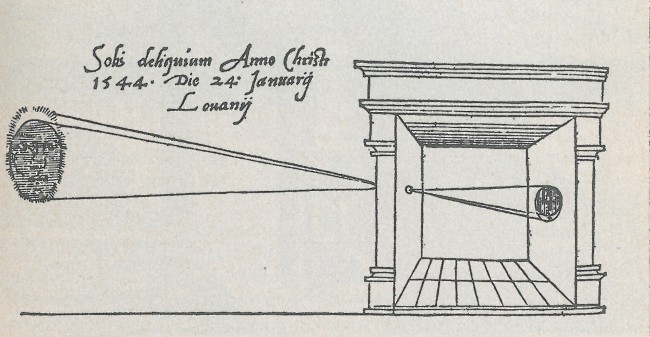
The above image is the oldest I can find illustrating the camera obscura —forerunner of the pinhole camera and operating along exactly the same lines.
No one knows how long ago the principle was discovered, tho one can
imagine it being held as something of a secret:
An image of the
external situation viewable from behind closed doors? Yeah, hello,
Ring Camera! Tactical advantage, there.
Not that the camera obscura, or even the pinhole camera, per se, functioned as what we might consider a camera —that is, no permanent record of the projected image could necessarily be produced.
In fact, what we call a camera takes its name from the
Latin word for “room” and a “camera obscura” means merely: dark
room.
That a darkroom may be associated with the
development of film from a camera is just one of those quirks
or kinks in the working out and expression of human knowledge. Don't let it confuse you.
This image comes from a 1545 treatise on astronomical and geometrical radiation by Gemma Frisius, in which he describes viewing the solar eclipse on January 24th of the previous year by employing just such a structure as we see here.
Even in those days, fools knew not to look at an eclipseThe illustrator has depicted the sun as a flat disk, not terribly far
away, and has given it a human face.
While none of this
represents the reality of ol' Frizzies experiment, it suits my purposes
not to have to deal with the giant globe of boiling plasma 93 million
miles from here.
So if I had reason to observe a painted disk on a brightly lit wall
from within my dark room, this setup serves admirably.
Notice that the illustrator intends to depict cones of light
—or a cone that passes through a small hole, inverting all its parts.
The resulting projection cone reveals an image, for all its
clarity, upside-down and reversed left-to-right, relative to
the original.
Since the illustrator would have had no knowledge of anything so abstract as photons it's worth imagining rays of light moving always in straight lines, such that, from the original image's 12 o'clock, as it were, a straight line passes through the little hole and lands on the projection's 6. From the image's 3 o'clock a ray can be traced to the projection's 9.
It may be worth noting that the smallness of the aperture, the hole
through which the light must pass, gives rise to the entire phenomenon.
A window would show the sun, not project it. We need all the light
to pass through what is essentially a point within a plane.
But moving on…
A question I had as a kid, seeing images like this —whether intended to show the functioning of a lens, a pinhole camera or whatnot— might have amounted to: How does the light know where the hole is?
I don't know that I articulated it in quite this way, but
there was a strong feeling that the hole (or lens) somehow drew the
light through itself.
The actual state of things is harder to grasp.
It is, in fact, astounding.
Let's get rid of the camera obscura for now, and just admire this image of an anthropomorphized sun that I've had painted on the wall. What the camera taught us is that light bounces off this painting and goes ABSOLUTELY EVERYWHERE.
Let's bring in a mirror, put it in the corner, look at it from near the painted disk. If we arrange everything correctly, what that mirror reveals is that, from every part of the painted disk, rays of light are pointing at the mirror. That we can see the image in the mirror indicates that those rays of light recross the room and land directly in our eye.
Now do something absurd. Sit on the floor. In the mirror now, what?
SOME OTHER PART OF THE ROOM.
From every part of the room, light rays are
traveling to every other part and these rays completely fill the
space of the room.
I imagine we're feeling a bit crowded, so let's just close our eyes and imagine a different room, one with no one in it. To simplify, let's make it a dark room, a camera obscura, but leave somewhere within it, a single candle burning.
There, that's soothing to the overtaxed inner eye.
Until we imagine
the light from the flame radiating out in all directions.
It must touch
literally all points reachable by straight lines.
Of
course, under the table or the shelf on which the candle sits must now
be pitch black, no?
No. Because now we must imagine that all the points at the end of straight lines from the flame, also reflect that light in all directions.
If we add a mirror to any part of the room, it will coherently reflect every point reachable in a straight line from the mirror, and the proof is that, no matter where we put our eye (also in a straight line from the mirror) we'll see some part of the room reflected. The mirror is not only collecting rays of light but sending them out again!
If you step into the room, it does not appear ablaze with light, but
your eye is only collecting the straight rays which land in it.
If you
could place your eye everywhere at once the light would be
blinding.
A pinhole is not collecting a cone of light, it's
excluding all light not already in that cone.
dM
20260812 Reading, PA
What we call empty space is not entirely empty. It's filled throughout with quantum
fields —like the famous Higgs, which lends elementary particles their mass.
Such fields are configured everywhere the same —so ubiquitous, we call it “vacuum.” And it's been stable for 14
billion years, give or take.
But it's just possible this vacuum state is merely metastable rather than absolutely so.
If a theoretical lower vacuum energy could exist, some point in the universe might eventually lapse into true
vacuum, with startling results.
It's highly doubtful that baryonic matter (protons, neutrons) could survive such a transition.
A bubble of the true vacuum, churning through spacetime in a widening gyre, things would fall apart —new
paradigm consume the old.
Cosmos re-emergent, from its own body: offspring eating its way free —leptons leaping!
Electrons (that's if they survived) liberated from their atomic prisons, from making
circles in that yard…
The structure of spacetime itself rewritten within the expanding sphere. The very concept of time
redefined——
The term is “false vacuum decay” and its possibility is well known, though incompletely
understood.
How could we even tell if our false vacuum had already, somewhere, failed?
Say it happened nearby: in the Centauri system, just 4.31 mean-light-years away.
Expanding outward at the speed of light —driven by the energy differential between false vacuum
and true— the bubble's edge reaches Earth some 52 months later. The first —and last— we'll know of it
No warning is possible, because the destructive front approaches at light speed. We
won't have time to say: Well, finally...
But the likelihood that a truer, more vacuum-y vacuum might form next door to the only beings capable of
anticipating it? Seems low.
One could only expect such a nucleation in our vicinity if it resulted from our own bungling
experimentation.
Someone fooling around with zero-point energy —in hot pursuit of perpetual motion— is as
likely an eventual cause of the demise of the status-quo as anything.
But it probably remains outside our power to fuck up quite that badly just yet, so:
- The bubble forms naturally, somewhere in the interstitial void, between galaxies
- Forms right now, out there, just seventeen billion light-years away
Well, here's the thing:
It can never reach us
I hear you shouting, inappropriately, Bullshit! Because you know that
we see, today, galaxies farther away than that:
Our visible universe extends some 46 billion years!
I hear you say.
But the universe is expanding. And that expansion is accelerating. The
bubble's edge, moving at c, will remain beyond what we call the cosmic event horizon.
In the far
future, our weird descendants may see no galaxies beyond our Local Group. Unless we keep good records, they'll
never know how small their universe has become.
At large enough scales, even now, spacetime's expansion is faster than light. This is
somehow allowable because nothing moves:
Everything only gets farther away
Maybe vacuum decay has already occurred, maybe more than once. We don't know how big the
universe is.
But if it happens far enough away, we might all yet be spared.
dM
20260805 Reading, PA
I decided to become more involved with SFWA ( you may know it as the Science Fiction Writers of America, but the name has changed, while the acronym hasn't) so I "volunteered" —always a mistake, really.
As a full member, and because I teach in Game Design and, yeah, specialize in Interactive Narrative, I've been invited to contribute to the Game Writing committee —and as I've worked a bit in publishing, to the committee running the brand new Games and Comics Quarterly magazine.
So far I've mostly done nothing. I mean, I cast a sort of vote on the cover image for
vol.2 of the magazine... And proposed a panel for a coming event:
An Arrow in the Knee: NPCs, the writer and AI —which, lemme tell you, reopened the can
of worms that is AI, today, in the writerspace.
But these are not my worms! This is not my can!
I'm just interested in helping those seeking professional development to wrangle all the freakin worms let loose upon the world by AI. Heck, I'm not even the messenger!
Don't Shoot!
dM
20260729 Reading, PA